
NXP LPC2131FBD64/01-S: A Comprehensive Technical Overview of the ARM7-Based Microcontroller
The NXP LPC2131FBD64/01-S stands as a prominent member of the LPC2000 family, representing a highly integrated 16/32-bit microcontroller built around the robust ARM7TDMI-S processor core. This microcontroller is engineered for applications demanding high performance, low power consumption, and a rich set of on-chip peripherals, making it a versatile solution for industrial control, automotive systems, and embedded networking.
Architectural Foundation: The ARM7TDMI-S Core
At the heart of the LPC2131 lies the ARM7TDMI-S RISC processor, operating at frequencies up to 60 MHz. This core is renowned for its simplicity and high efficiency. A key feature is its support for the Thumb instruction set, which allows it to execute 16-bit instructions for improved code density while retaining the full 32-bit processing capabilities for performance-critical tasks. This dual instruction set provides an excellent balance between compact code size and execution speed, optimizing memory usage and system cost.
Advanced Memory Configuration
The microcontroller features a sophisticated memory architecture designed for efficient operation. It incorporates 128 kB of on-chip high-speed Flash memory, which supports In-System Programming (ISP) and In-Application Programming (IAP). This allows for flexible firmware updates without removing the chip from the circuit board. Alongside the Flash, it is equipped with 16 kB of Static RAM (SRAM). The memory system includes a Memory Accelerator Module, which significantly enhances performance by enabling the ARM7 core to execute critical interrupt service routines and general code from RAM at full speed without wait states.
Rich Set of Integrated Peripherals
The LPC2131 distinguishes itself with its extensive array of integrated peripherals, reducing the need for external components and simplifying system design.
Dual 10-bit ADCs: It includes two 8-channel 10-bit Analog-to-Digital Converters (ADCs), providing a total of 16 analog input channels for precise data acquisition from sensors and other analog sources.
Multiple Serial Interfaces: Communication is facilitated by a wide variety of interfaces, including two UARTs (Universal Asynchronous Receiver/Transmitters), two I²C-bus interfaces for communication with sensors and EEPROMs, and two SPI (Serial Peripheral Interface) ports. This makes it ideal for systems requiring extensive connectivity.
Timers and PWM: The chip features two 32-bit and two 16-bit timers, along with Pulse Width Modulation (PWM) units with six outputs, perfect for motor control and power management applications.
Real-Time Control: A key feature is the Real-Time Clock (RTC) with a separate power pin, allowing it to keep time even when the main processor is powered down, which is crucial for low-power applications.
External Connectivity: It offers up to 47 General Purpose I/O (GPIO) pins, with 9 pins configurable as edge- or level-sensitive external interrupt sources, providing ample connectivity for user interface and control.
System Control and Power Management
The device incorporates several features for robust system control and low-power operation. It includes an on-chip Phase-Locked Loop (PLL) for precise clock generation and multiplication from an external crystal. Advanced power management features support multiple reduced-power modes: Idle and Power-down. These modes allow the CPU and individual peripherals to be selectively powered down, drastically reducing current consumption in battery-operated or energy-sensitive applications.
Physical and Packaging Details
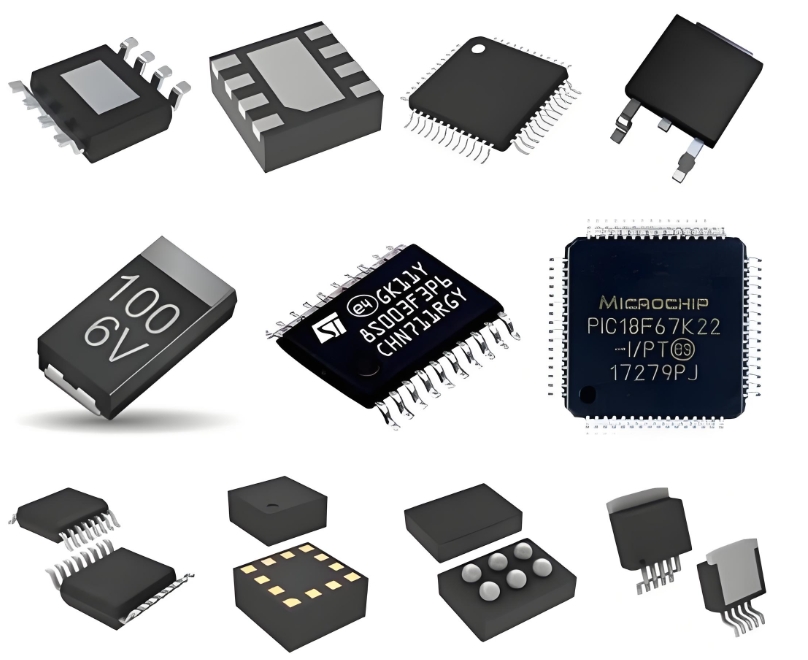
The LPC2131FBD64/01-S is offered in a 64-pin LQFP (Low-Profile Quad Flat Pack) package. This surface-mount package provides a compact form factor suitable for space-constrained PCB designs while offering access to the full range of the microcontroller's features.
ICGOOODFIND
The NXP LPC2131FBD64/01-S is a highly capable and well-rounded microcontroller that leverages the proven ARM7TDMI-S architecture to deliver a powerful blend of processing performance, extensive peripheral integration, and efficient power management. Its combination of large memory, dual ADCs, and multiple communication interfaces makes it an enduringly popular choice for developers designing complex embedded systems that require reliable real-time control and connectivity.
Keywords:
ARM7TDMI-S, On-Chip Flash, Integrated Peripherals, Low-Power Modes, Real-Time Control

